Stage Manager
from January to March 2025
As part of my role as a stage manager, I had to think about how to organize a system that would allow me to have all the relevant information to coordinate the lighting, sound, and projection directors. With the invaluable help of Frédérique Tremblay, I was able to conduct extensive research on cue sheets models to create a general technical cue sheet tailored to the needs of Exotopie, specifically for live performances interacting with an interactive installation. I therefore decided to create an Excel file organized, so that each minute had an identified cue for sound, projections, and lighting, as well as smoke cues, ensuring that we had all the necessary notes to streamline the evening of the happening. Throughout the semester, I organized multiple rehearsals, submitting a schedule in advance to ensure that all performers were progressing with their performances and to insure that they understood how to integrate their performance both with the sound system and the visual management system.
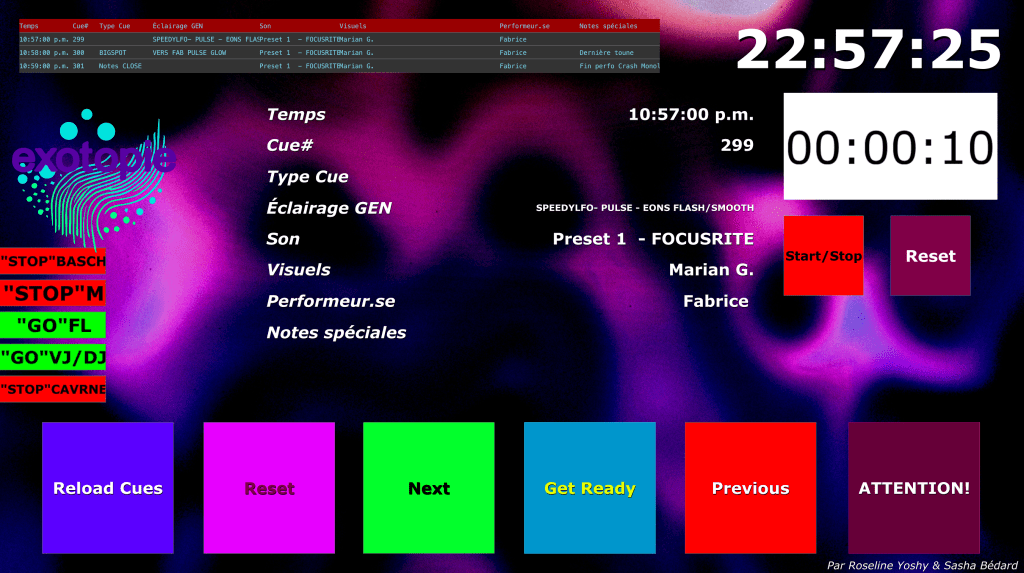
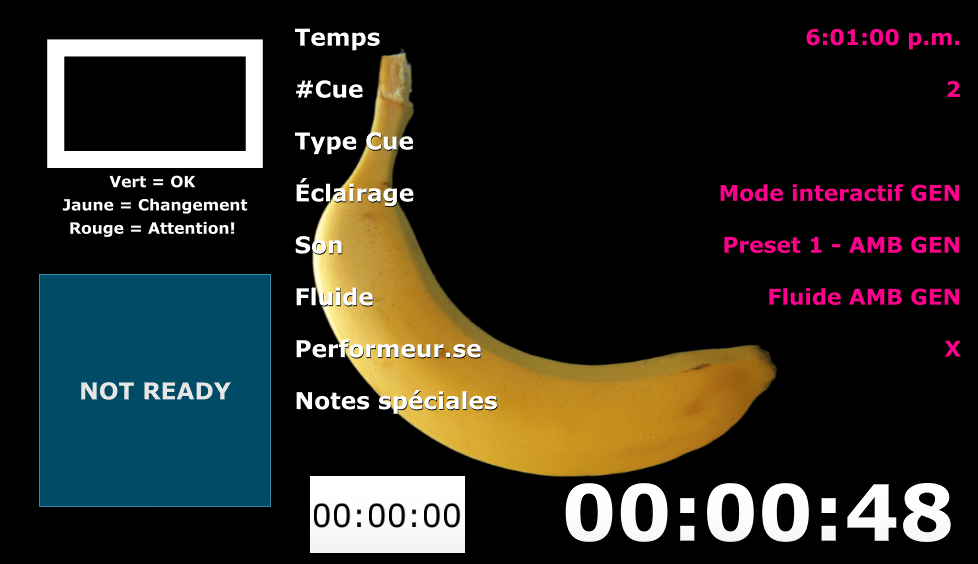
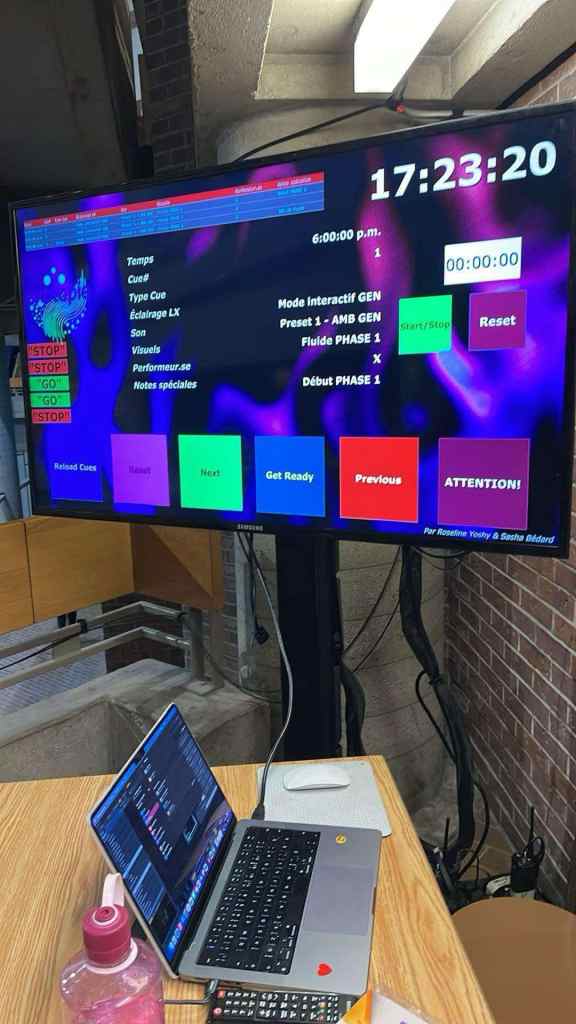
Another challenge in coordinating a large group of performers was establishing a system to track the duration of performances and the timing of transitions. In collaboration with Sasha Bédard (Interactive Media, UQÀM), we developed a TouchDesigner interface that integrated the Excel file (Cue Sheet technique – 8 mars 2025), allowing us to program buttons for real-time cue selection. This system then transmitted the same information to a receiver interface, enabling all the teams to follow the cues seamlessly on their screens during the event.
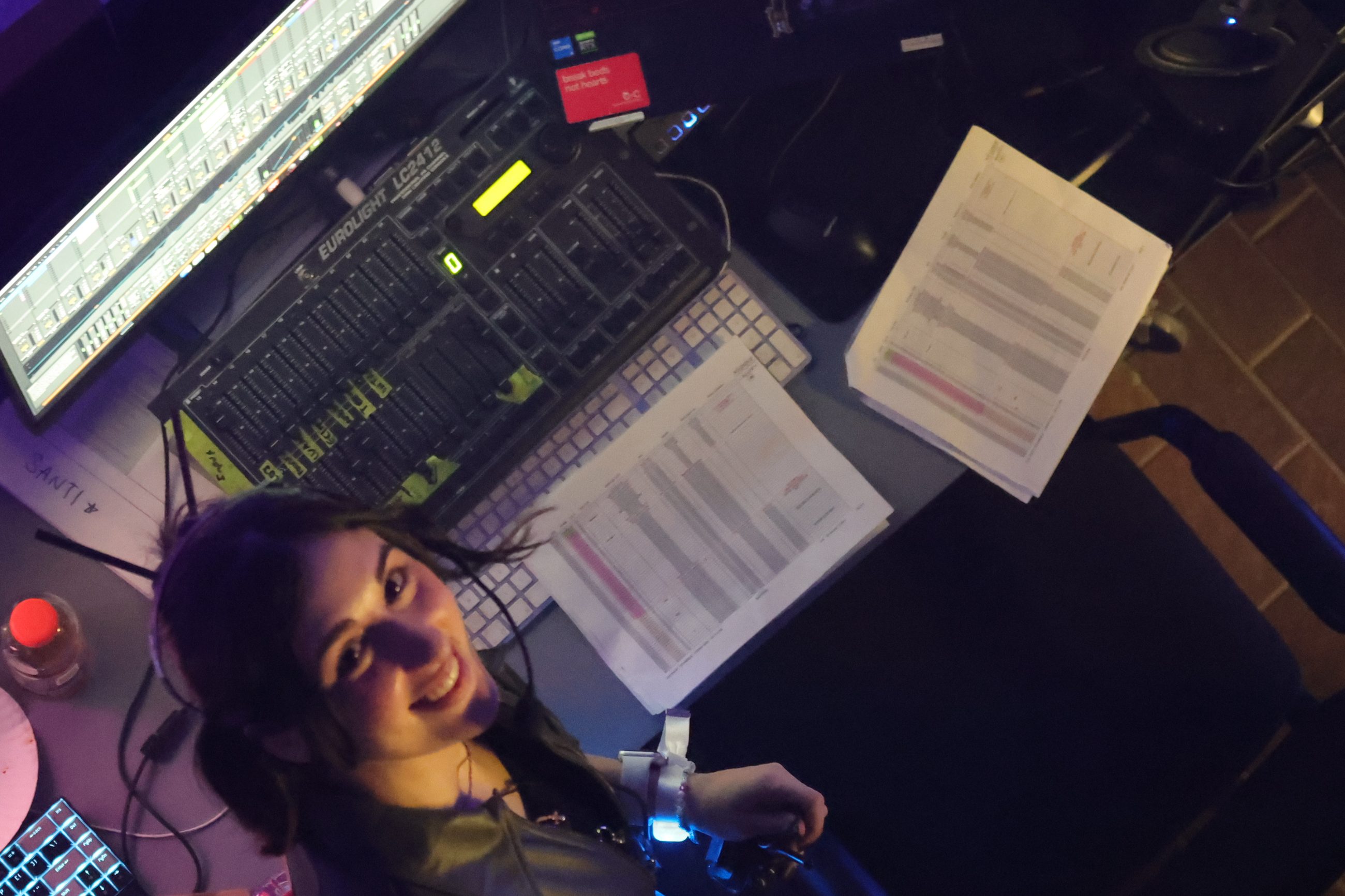
Picture taken by Sasha Bédard
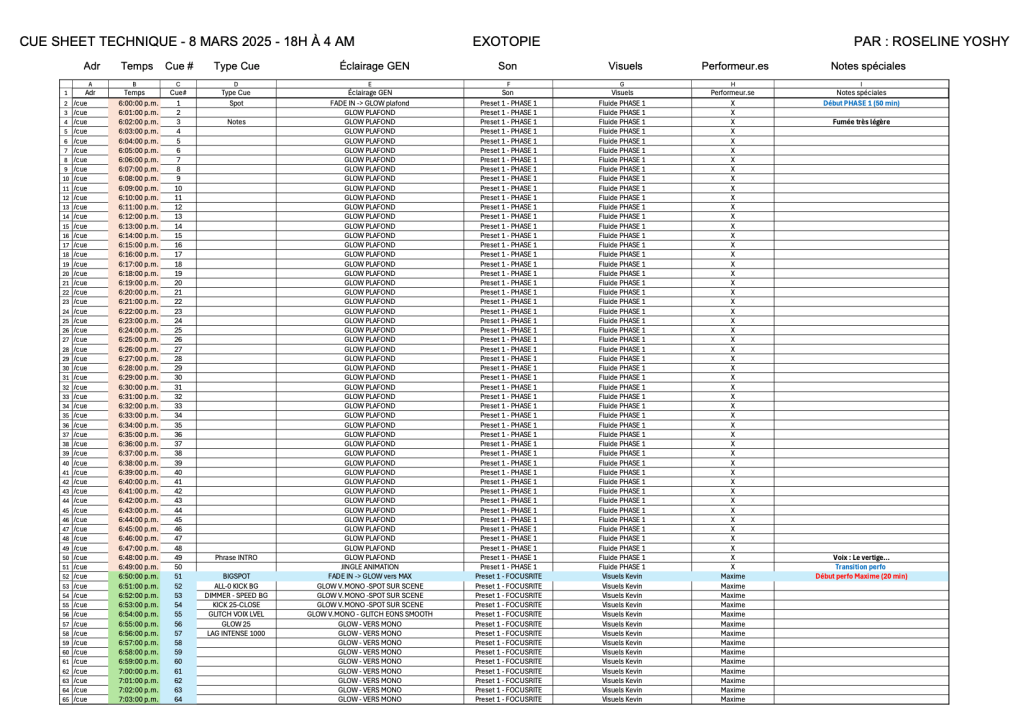
Page 1 of the Technical Cue Sheet – Excel format that I designed.
The main cue interface sent all cues from the cue sheet to the receiver interface. It also included a timer that could be started at the beginning of each performance and reset as needed, along with a real-time clock displayed in the top right corner. On the left side, we ensured that the next three cues were always visible. Meanwhile, the computers running the receiver patch allowed performers to indicate their readiness by clicking a « Not Ready » button, which then triggered a green « Go » button on the main interface. For example, a « GO » signal from the VJ/DJ booth meant the performer was ready and waiting for the technical team to initiate the transition into their performance.
The receiver interface was built to process cues in real time. Whenever a cue changed, a white rectangle in the top right corner would flash yellow before turning green to indicate the active cue. For example, on the VJ computer or the computer at the front of the stage near the dancefloor, performers could track their remaining performance time by viewing the data displayed at the bottom of the screen next to the clock.
Additionally, I trained my two colleagues to use my cue system, so we could share the responsibility of tracking cues throughout the evening of March 8th, as I was also performing. Another key aspect of my role was ensuring seamless communication throughout the evening, as our event took place in a large space. With the help of Stratégie de production students working on our project, I coordinated the rental of eight walkie-talkies and assigned them to key team members, including the technical director. We also scheduled shifts to ensure a continuous presence with the performers, checking their readiness before their showtime and addressing any potential technical issues. Finally, I oversaw the set up of our technical team’s workspace by arranging the rental of a television, which displayed the main cue interface. This allowed team members to quickly track our progress throughout the evening.
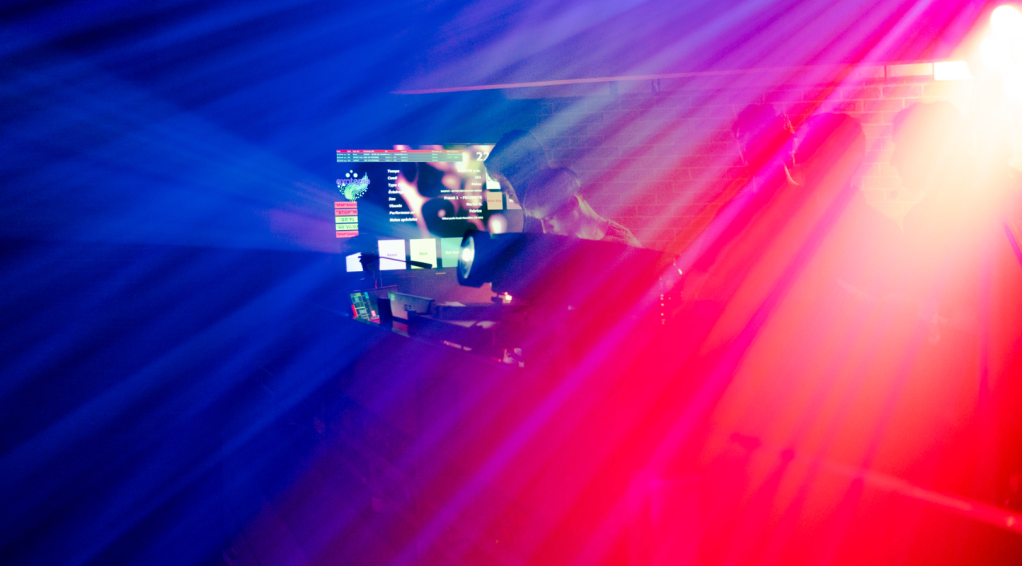
Picture taken by Léonie Poulin
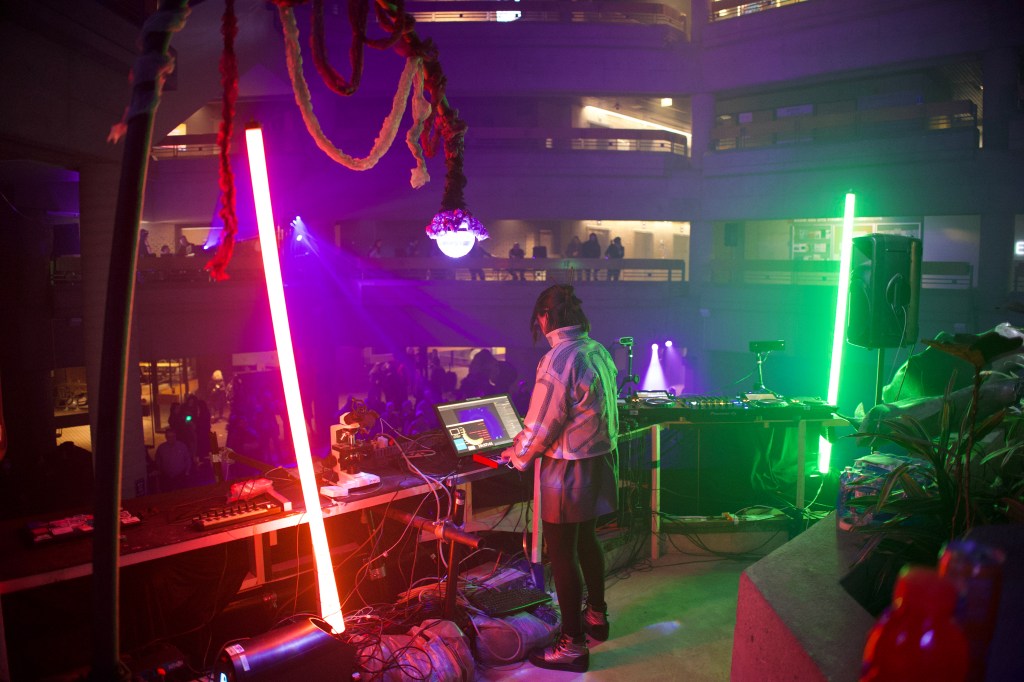
Picture taken by Rosalie Turcotte – performance Orage
 Roseline Yoshy | Portfolio